
Mole Evaluation Services in Clemmons, North Carolina
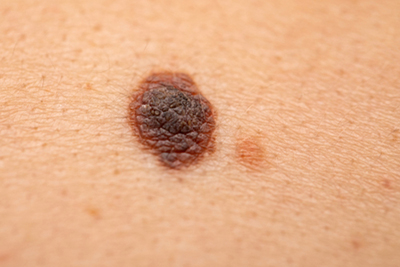
Moles, also known as nevi, are common skin growths that can appear anywhere on the body. They are typically brown or black and can vary in size, shape, and color. While most moles are harmless, it’s important to understand their characteristics and monitor any changes, as some moles can develop into skin cancer. Beth Gurley and Scott Gurley, the certified physician assistants at Clemmons Dermatology in Clemmons, North Carolina, want to make sure all our patients know what to look for in moles that could indicate they need care.
Types of Moles
Moles can be classified into several types, including congenital moles, which are present at birth, and acquired moles, which develop over time. Acquired moles can appear during childhood or adolescence and may continue to change throughout life.
Common types of moles include:
- Common Moles: These are typically small, round, and uniform in color. They are usually harmless and do not require treatment unless there are changes in appearance.
- Atypical Moles: Also known as dysplastic nevi, these moles may have irregular shapes, uneven colors, and larger sizes. Atypical moles can be a risk factor for melanoma, so they need to be monitored.
- Seborrheic Keratosis: While not technically moles, these non-cancerous growths can resemble moles and are often brown or black. They are usually harmless but can be removed for cosmetic reasons.
When to Monitor Your Moles
It’s important to regularly check your moles for any changes in size, shape, color, or texture. The ABCDE rule is a helpful guideline for monitoring moles:
- A for Asymmetry: One half of the mole does not match the other half.
- B for Border: The edges are irregular, ragged, or blurred.
- C for Color: The color is not uniform and may include shades of brown, black, or even red, white, or blue.
- D for Diameter: The mole is larger than 6mm (about the size of a pencil eraser).
- E for Evolving: The mole is changing in size, shape, or color over time.
If you notice any of these warning signs, schedule an appointment at our Clemmons, North Carolina, office for further evaluation.
The Importance of Professional Evaluation
When you visit Clemmons Dermatology, Beth Gurley, PA-C, and Scott Gurley, PA-C, thoroughly evaluate moles and skin lesions. During your appointment, they may use dermatoscopy, a specialized tool that allows for a closer look at the mole’s structure.
If a mole appears suspicious, a biopsy may be recommended to determine whether it is benign or malignant. Early detection is key to successful treatment, so it’s crucial to raise any concerns promptly.
Treatment Options for Moles
Most moles do not require treatment unless they are causing discomfort or showing signs of change. If a mole is deemed suspicious or if you wish to have it removed for cosmetic reasons, several treatment options are available. These may include:
- Excision: The mole is surgically removed along with a small margin of surrounding skin.
- Shave Removal: The mole is shaved off at the skin level, typically used for raised moles.
- Laser Treatment: In some cases, laser therapy may be used to remove or reduce the appearance of moles.
Find Out if Your Moles Are Dangerous
Moles are common and normally harmless, but they can become a problem. Beth Gurley, PA-C, and Scott Gurley, PA-C, at Clemmons Dermatology provide expert care and guidance regarding your moles and general skin health. If you have concerns about your moles or would like to schedule a skin examination, call our Clemmons, North Carolina, office at (336) 979-4499.